
|
VALE PETER ABREHART 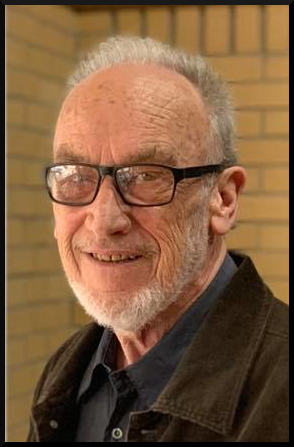
Our much loved and esteemed Chairperson Peter Abrehart passed away peacefully in his sleep on Monday 11 December 2023. Peter was a stalwart and dedicated Unitarian. He was made a Life Member at our last AGM after more than 50 years of dedicated service to our church – a well-deserved honour. Peter joined the Melbourne Unitarian Peace Memorial Church in 1971. Until then he had been a practising Catholic and a staunch union member of his telecommunication union, the CEPU. He battled between his faith and his politics for a considerable time, but in the end, his political convictions won, and he became a Unitarian. Peter and his then-wife Lyn were married in our church on 23 January of that year. It was the discussions within his union, his reading of the Beacon, the role played by our church, and the wonderful leadership of Reverend Victor James in opposing the Vietnam War that finally convinced Peter. Peter was never a passive member of either the church or his union. He was always deeply involved in every service, every campaign, every struggle for justice and peace. He was a committed Beacon Board member for decades, and wrote extensively for Beacon, expressing his concerns about the failure of the capitalist system to meet the needs of the community. It was through his experiences, both in the church and in his role as a unionist and then union official, that he came to recognise that such a system would never meet the needs of those who create wealth through their labour, and he became a passionate supporter of socialism. Peter extensively and methodically researched how capital was exploiting the people and the addresses he delivered in our church reflected this in every talk. Peter also established and made popular the Church Philosophy Group, which operated for a number of years and in which he led the discussions. Peter was elected chairman of our church with overwhelming support from its members, in which capacity he chaired our meetings for many years and, recently, despite continuing health problems. Nor did his health problems prevent him from attending all rallies for peace and justice whenever they were taking place. Peter represented this church at the Australian Unitarian Universalist Association (ANZUUA), which is the peak body for Unitarian churches in Australia and NZ and acted as its treasurer for many years. He was also a celebrant and conducted many marriages and funerals for our church over this period. Peter is survived by his three children, son Glen, and daughters, Leonie and Kym. |
Melbournes' First Unitarian Church
Established on the 29th of November, 1852, the Melbourne Unitarian Church is one of the oldest religious organisations in Victoria.
The Melbourne Unitarian Peace Memorial Church is a church with a difference. We impose no creedal demands and we have no liturgy you must adhere to. Our church motto is ‘Seek the Truth & Serve Humanity’. All of our Services, written material, programmes, committees, and work are based on this philosophy.
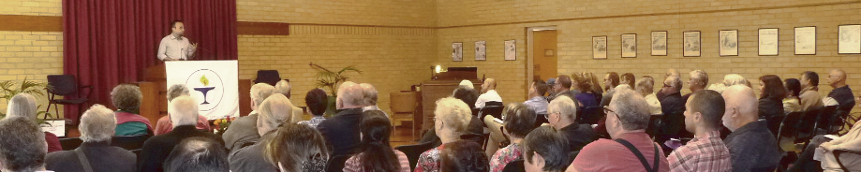
Our Sunday Service, which commences at 11am, is an hour of music, inspiring words and an address based on issues of peace, the environment, social justice, democratic rights and political issues of a non-party nature. We firmly believe that churches have a responsibility to take up all issues that affect the people.
All who care about the future of our country and its people, who support social justice, the environment and democracy, and who demand world peace, are welcome at our church. If you are looking for a church with a difference, the Melbourne Unitarian Church may be just what you are looking for.
The church has produced a leaflet to provide a basic introduction to the tenets of our organisation: Are You A Unitarian Without Knowing It?
 |
The Unitarian Half-Hour “Seek The Truth and Serve Humanity” goes to air at 10:30 am Saturday mornings on radio 3CR, (855 on the AM dial) |